For much of the twentieth century, Americans ate from remarkably similar dinnerware whether they were enjoying breakfast in a roadside diner, lunch aboard a railroad dining car, dinner in a grand hotel, or a meal in a hospital cafeteria. Behind those plates and coffee cups stood a handful of American manufacturers whose products became the standard for commercial food service.
Unlike delicate porcelain intended for display, restaurant china was built to work. Made from vitrified china or semi-porcelain, it was designed to resist chipping, survive industrial dishwashers, and withstand years of constant use. While millions of pieces were produced, much of this dinnerware was discarded as restaurants modernized, making surviving examples surprisingly collectible today.
Here are the companies that built America’s restaurant tables.
Buffalo China (1901–2004)
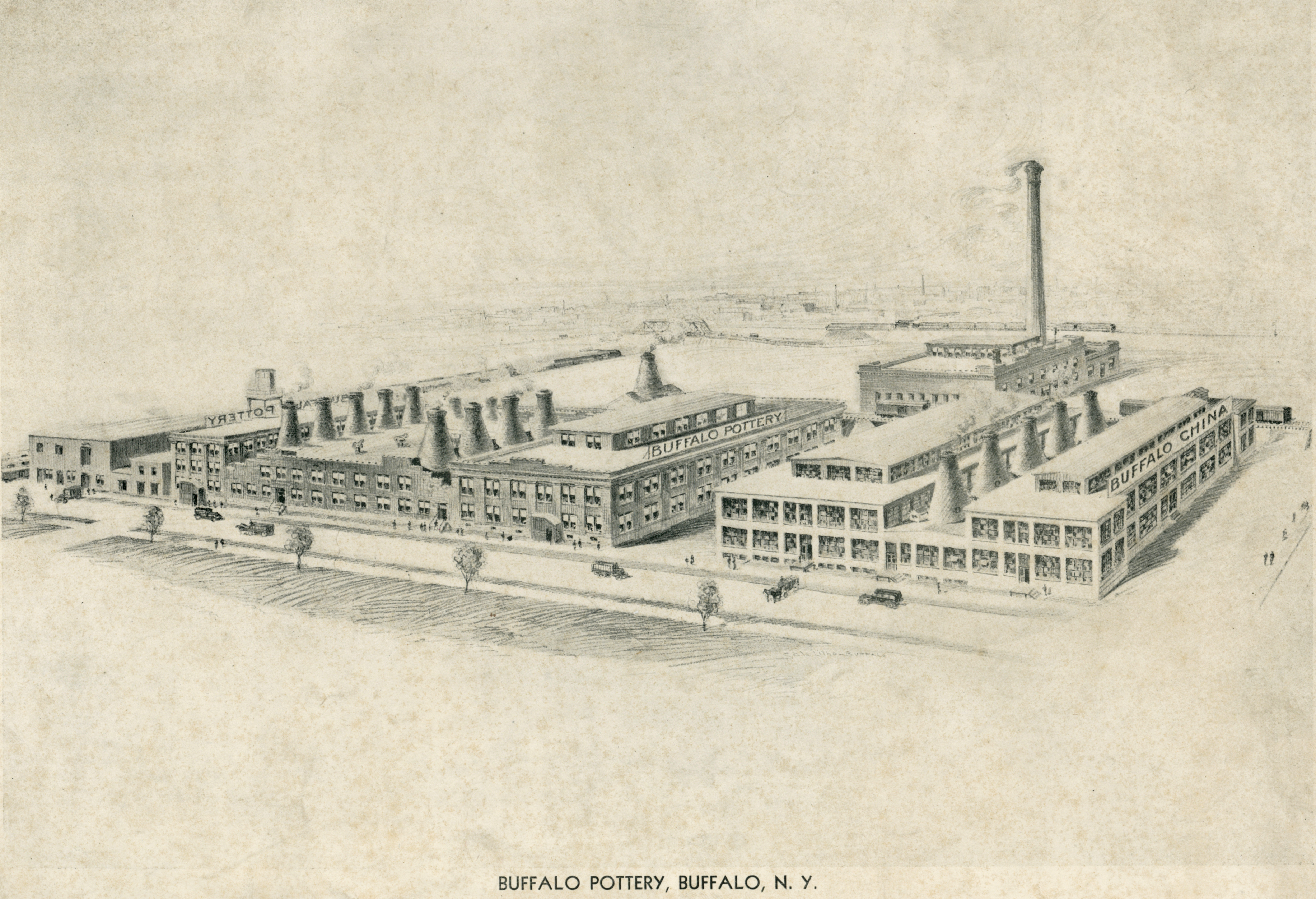
Founded in Buffalo, New York, as Buffalo Pottery in 1901, the company gradually shifted its focus from art pottery to commercial dinnerware. In 1956 it officially became Buffalo China, reflecting its dominance in the institutional china market.
Buffalo supplied restaurants, hotels, railroads, military facilities, hospitals, and schools throughout the United States. Its china appeared aboard the Chesapeake & Ohio Railway, the Union Pacific Railroad, and numerous other passenger railroads during the golden age of dining cars. Luxury destinations including The Greenbrier in West Virginia and The Ahwahnee Hotel in Yosemite National Park also commissioned Buffalo ware, as did the U.S. Navy and many government institutions.
Collectors appreciate Buffalo China for its durability, clean designs, and the wide variety of custom backstamps bearing the names of hotels, restaurants, and railroads.

Syracuse China (1871–2009)

Founded as the Onondaga Pottery Company in Syracuse, New York, Syracuse China became one of America’s premier manufacturers of commercial dinnerware. The company earned a reputation for combining durability with elegant design, making it a favorite of luxury hotels and first-class dining rooms.
Its customers included the Waldorf Astoria, The Plaza Hotel, numerous Pullman dining cars, and major passenger railroads. During the Jet Age, Syracuse China also produced dinnerware for airlines, including Eastern Air Lines, United Air Lines, American Airlines, and other commercial carriers seeking attractive yet durable in-flight service.
The company also embraced modern design, producing patterns by industrial designers such as Russel Wright. Today, Syracuse remains one of the most sought-after names in restaurant china collecting.
Shenango China (1901–1991)
Founded in New Castle, Pennsylvania, Shenango China specialized almost exclusively in commercial food service. While many manufacturers balanced retail and institutional production, Shenango built its reputation supplying restaurants, hotels, railroads, schools, and government agencies.
Its dinnerware appeared aboard several passenger railroads and in hotel dining rooms throughout the country. Shenango also produced china for military contracts during both World Wars and later became known for manufacturing pieces used in the White House and other government facilities through affiliated lines.

Collectors often encounter Shenango pieces with custom restaurant logos, hotel names, and institutional backstamps, making the company a favorite among those interested in American dining history.
Homer Laughlin China Company (1871–Present)
Founded in 1871 in Newell, West Virginia, Homer Laughlin is one of the last great survivors of America’s commercial china industry.
Although best known today for Fiesta dinnerware, Homer Laughlin has supplied restaurants, diners, hospitals, schools, military dining facilities, and institutional cafeterias for well over a century. Unlike many of its competitors, the company successfully balanced consumer dinnerware with commercial production, allowing it to remain in business while many rivals disappeared.
Because Homer Laughlin documented its production so thoroughly, many of its restaurant pieces can be dated quite accurately using factory backstamps and date codes.

Iroquois China Company (1905–1969)

Operating in the Syracuse, New York, area, Iroquois distinguished itself by bringing modern industrial design to commercial dinnerware.
The company worked with celebrated designers including Russel Wright and Ben Seibel, producing restaurant and hotel china that reflected changing American tastes after World War II. Its products appeared in hotels, restaurants, institutional dining rooms, and airline service while introducing cleaner, more contemporary forms to commercial table settings.
Although the company closed in 1969, Iroquois remains highly respected among collectors of mid-century modern design.
Mayer China Company (1910–1990s)
Founded in Beaver Falls, Pennsylvania, Mayer China focused on institutional dining rather than luxury hospitality. Its durable products served schools, universities, hospitals, factories, and large corporate cafeterias where reliability mattered more than elaborate decoration.

While Mayer seldom produced the highly customized hotel china that attracts some collectors, it became an important supplier to educational and industrial food service operations throughout the twentieth century. The company gradually disappeared through mergers and industry consolidation during the 1990s.
Wallace China Company (1924–1964)
Based in Vernon, California, Wallace China helped furnish the rapidly expanding hospitality industry of the American West.
Its products were found in California hotels, roadside restaurants, coffee shops, and regional railroad dining services during the postwar travel boom. Wallace became particularly well known for colorful mid-century designs that reflected Southern California’s optimistic, modern aesthetic.

Today, Wallace pieces are especially popular among collectors of West Coast restaurant memorabilia and mid-century design.
TEPCO China (1920s–1970s)
The Technical Porcelain and Chinaware Company, better known simply as TEPCO, operated in El Cerrito, California, and became one of the defining names in West Coast restaurant china.

TEPCO supplied diners, cafeterias, schools, hotels, and military facilities throughout the western United States. It is perhaps best remembered for its close association with Chinese-American restaurants, particularly in California, where countless family-owned establishments ordered customized TEPCO dinnerware bearing their own names and logos.
Because many of these restaurants have disappeared, surviving TEPCO pieces have become an important record of Chinese-American culinary history.
Jackson China Company (Early 1900s–Late 20th Century)
Located in Falls Creek, Pennsylvania, Jackson China produced durable vitrified dinnerware for restaurants, cafeterias, hospitals, and institutional kitchens across the country.

Although it never achieved the national recognition of Buffalo or Syracuse, Jackson earned a reputation for dependable commercial china that could withstand years of heavy use. Today, collectors most often encounter Jackson pieces bearing the names of regional restaurants, schools, hospitals, and hotels, offering a glimpse into local dining history.
Collecting Restaurant China Today
One of the pleasures of collecting restaurant ware is that every piece tells a story.
The easiest way to identify a piece is by its backstamp, which usually identifies the manufacturer and sometimes the customer. Restaurant names, hotel logos, railroad heralds, airline insignias, military markings, and university seals can often narrow a piece to a particular period or location.
Collectors also pay close attention to pattern names, shape numbers, and company trademarks. For example, Buffalo pieces marked “Buffalo Pottery” predate the company’s 1956 name change, while Homer Laughlin’s factory date codes can often identify the exact year—and sometimes even the month—a piece was produced.
Custom china made for famous railroads, luxury hotels, early airlines, national parks, or long-closed restaurants is often especially desirable because it preserves a tangible piece of American history.
An Enduring Legacy
Restaurant china was never intended to become collectible. It was designed to be practical, affordable, and nearly indestructible.
Yet these sturdy plates and cups have become some of the most evocative artifacts of twentieth-century America. They recall the elegance of railroad dining cars, the glamour of grand hotels, the optimism of early air travel, and the countless neighborhood diners where generations gathered over coffee and pie.
For collectors, every backstamp is more than a maker’s mark. It is a connection to the places Americans traveled, the meals they shared, and the companies that quietly helped define everyday life.



Leave a Reply