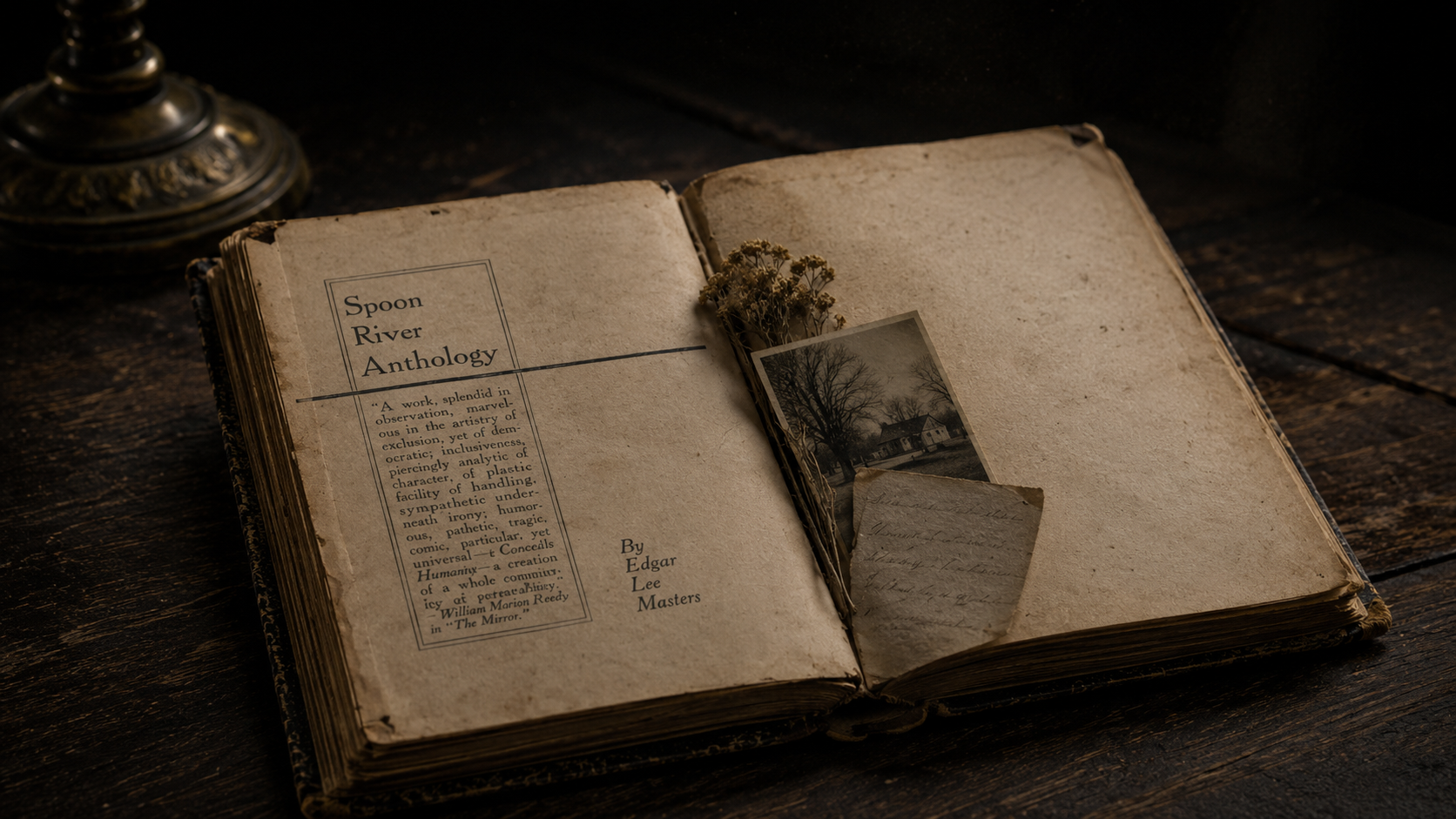
There is a particular kind of object that refuses to remain passive. Not a chair, not a mirror, not even a photograph—but a book. Not for what it says, but for what is done to it.
Edgar Lee Masters’ Spoon River Anthology has always occupied a strange space in American literature. Its voices speak plainly, even bluntly, from beyond the grave. But what makes certain early editions so compelling to collectors is not the printed epitaphs. It is the evidence that readers did not leave those voices alone.
They answered them.
In this episode of Antiques Mysteries, we step into that quiet exchange. The penciled underlines that linger on certain names. The pages worn soft where someone returned again and again. The objects left behind—photographs, flowers, fragments of lives—pressed into the book as if to anchor fiction to reality.

What begins as a literary curiosity quickly becomes something more intimate, and more unsettling. These markings suggest readers who saw themselves, or their neighbors, in Masters’ imagined dead. People who used the book not simply to read, but to record, to accuse, to remember.
And in doing so, they transformed it.
Because once a book becomes a place for private confession, it stops being just an object. It becomes a kind of witness. A layered record of lives intersecting across time—author, reader, and the unnamed figures they could not forget.
Some antiques tell their stories openly. Others require a closer look.
This one whispers.

Collecting Notes: Collecting copies of Spoon River Anthology by Edgar Lee Masters offers a surprisingly rich and personal window into early 20th-century American literary culture. First editions from 1915 are especially prized, often identified by their publisher, The Macmillan Company, and subtle points like typography, binding color, and dust jackets, which are rare to find intact. Beyond true firsts, collectors often seek out early printings, illustrated editions, or copies bearing inscriptions, marginalia, or ephemera tucked between pages, since the book’s elegiac, small-town voices invite readers to engage with it intimately. Vintage copies sometimes carry the quiet traces of past owners, making each one feel like an extension of the anthology’s own chorus of lives remembered.



Leave a Reply