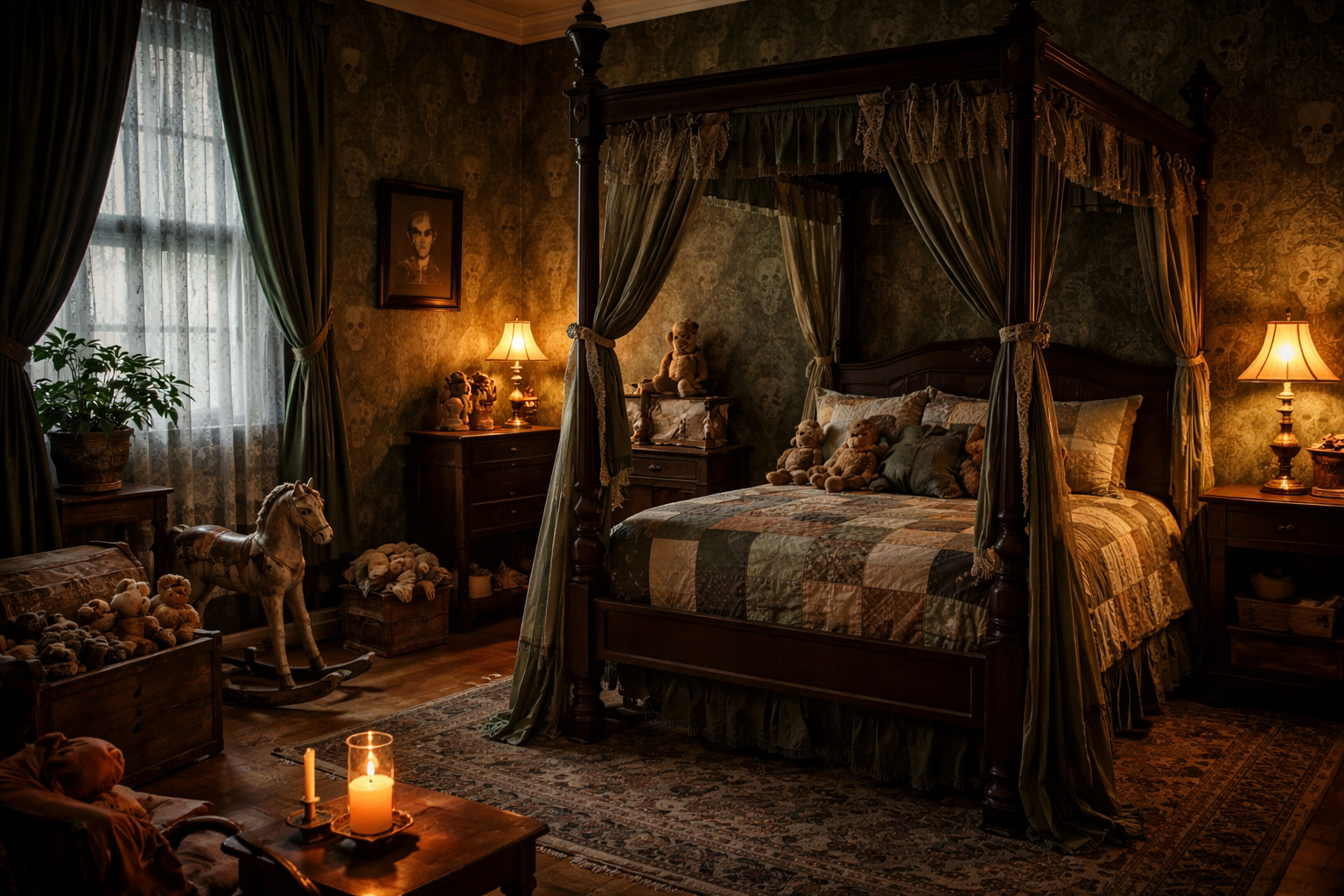
The Poison in the Walls

In the late 19th century, families fell mysteriously ill in their own homes. Children were pale and constantly exhausted. Mothers felt relief the moment they stepped outside. Doctors were baffled—until one Michigan physician looked closer at the walls.

Robert Kedzie discovered that bright green wallpaper, all the rage in Victorian homes, contained arsenic. As the paper aged, tiny particles flaked into the air, contaminating bedrooms and nurseries. His shocking findings were preserved in Shadows from the Walls of Death, a book so toxic that libraries destroyed most copies to protect staff.

This episode traces the strange and deadly intersection of fashion, chemistry, and domestic life. Some of these wallpapers survive today, sealed behind glass, a reminder that danger sometimes hides where we least expect it—in the very walls we call home.


Portland Art Events Calendar

Discover more from Urban Art & Antiques

Subscribe to get the latest posts sent to your email.

Responses

  1. Marius Avatar

    The pursuit of aesthetic perfection once turned Victorian homes into silent, arsenic-laced traps. This historical case serves as a somber reminder that technical progress and design trends must always be balanced against human safety. How do you think our modern obsession with “fast fashion” and synthetic materials might be viewed by future generations in a similar light?

    Like

    1. Eric Avatar

      Great question! The thing i immediately think of is how much in our homes is currently made of plastic in one form or another. It burns faster and hotter and there is likely some contribution to the microplastics invading our systems.

      Like

Leave a comment

Antiques Mysteries and Great Paintings from Urban Art Antiques | Listen Notes
