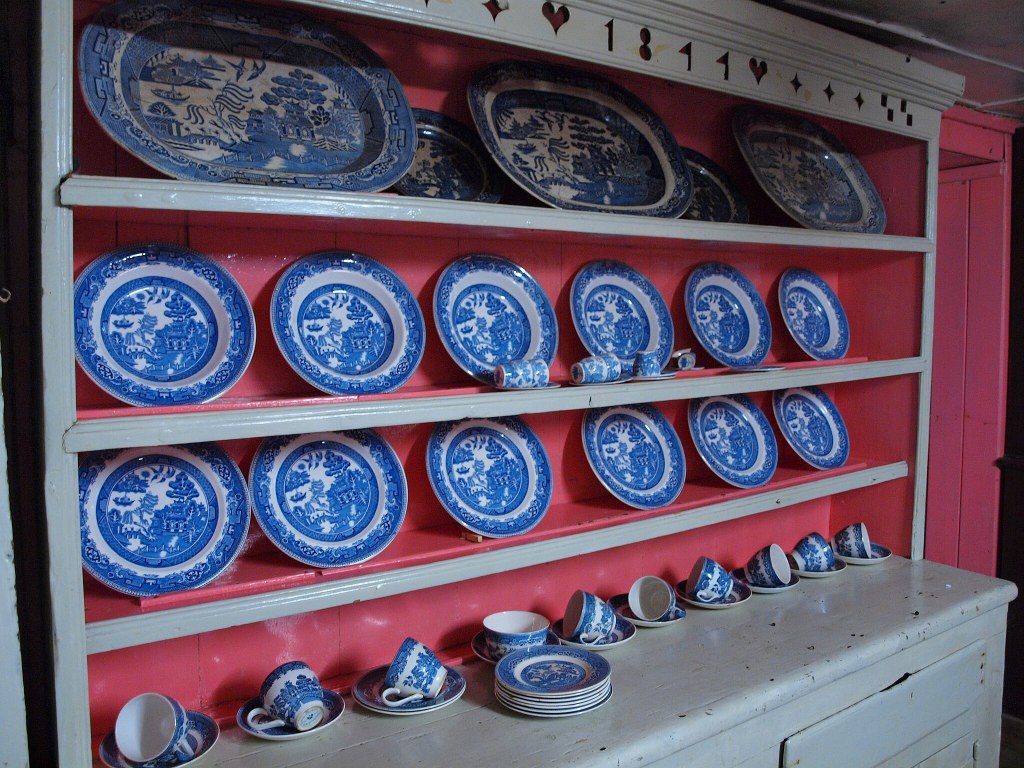
If you’ve ever wandered through an antique shop or peeked into a grandmother’s china cabinet, chances are you’ve seen Blue Willow. That crisp blue-and-white pattern with the little pagoda, the willow tree, and the birds flying overhead is one of the most recognizable designs in the ceramic world. For collectors, it’s both approachable and endlessly fascinating.

A Quick Backstory
Willowware started in England in the late 1700s. Potters like Josiah Spode and Thomas Minton borrowed design elements from Chinese porcelain and adapted them for Western tastes. The centerpiece was a pastoral scene featuring a willow tree, a bridge, a pagoda, and a pair of birds. Over time, people started calling the pattern simply “Blue Willow” or “Willowware” because of the willow tree that anchors the design.

The pattern became so popular that nearly every English pottery made a version of it. It wasn’t tied to one brand—Willowware was more of a style name than a company name—which is part of why it spread so quickly.
Crossing the Atlantic
By the early 19th century, Blue Willow was being exported to America in huge quantities. It was a perfect fit for middle-class households: affordable, durable, and pretty enough for both everyday meals and Sunday dinners. American potteries later picked up production too, especially in the late 19th and 20th centuries. Companies like Homer Laughlin, Buffalo Pottery, and Royal China all made their own versions for the U.S. market.

In fact, Willowware was so common in America that by the mid-1900s you could find it everywhere—from department stores like Sears to five-and-dime shops. It became one of those household staples that felt both traditional and accessible, which is why so many people today remember it from family kitchens and holiday tables.

Why People Collect It
- It’s beautiful and familiar. The blue-and-white look goes with just about everything.
- There’s history in every piece. Early English Willow connects you right back to the 19th century, while mid-century American versions have a nostalgia all their own.
- There’s variety. Most people know the classic blue, but Willowware also comes in brown, green, red, and other less common colors.
- It’s everywhere—but not always the same. Some pieces are humble and common, others are rare and pricey. That mix keeps collecting fun.
Tips for New Collectors
- Start small. Plates are easy to find and usually affordable, so they’re great first pieces.
- Flip it over. The maker’s stamp on the back tells you who made it—and sometimes when.
- Check condition. Chips and cracks aren’t the end of the world, but they’ll bring the price down.
- Look for the unusual. Teapots, platters, kids’ sets, and advertising pieces in the Willow pattern are always conversation starters.
- Know what’s old and what’s new. Since Willowware has been made continuously for more than 200 years, plenty of pieces on the market are modern. They’re lovely for display, but don’t confuse them with antiques.
The Market Today
You don’t have to spend a fortune to enjoy collecting Willow. Everyday 20th-century dinnerware often sells for just a few dollars a plate. On the flip side, rare colorways or early English examples can fetch impressive sums at auction. Whether you’re bargain-hunting at thrift shops or chasing rarities at estate sales, there’s something out there for every budget.
The Real Appeal
For many collectors, Willowware isn’t just about the objects—it’s about the memories. Maybe it reminds you of family dinners, a special teapot, or the set you always saw in your grandmother’s hutch. That mix of nostalgia, history, and beauty is why Willowware has stayed popular for more than two centuries. And the best part? It still looks just as good on the table today as it did back then.
Cover image: Smirkybec via Wikimedia Commons





Leave a reply to Miriam Wiley Cancel reply