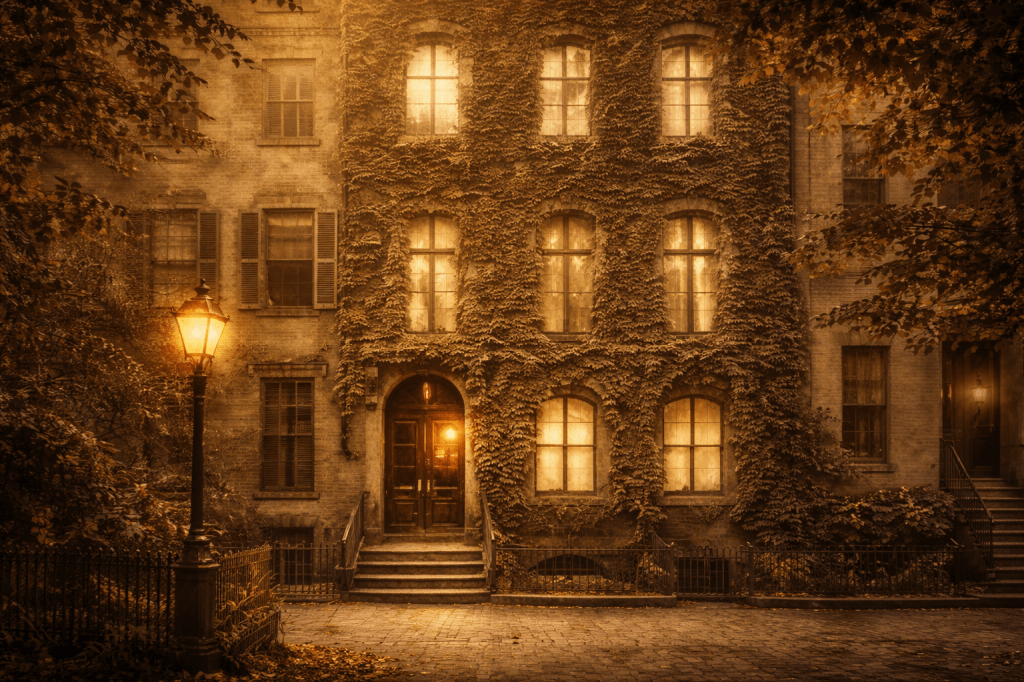
Some mysteries are loud. Others barely register at all.
In the nineteenth century, entire lives could pass through a house and leave behind almost nothing. No scandal. No records worth keeping. Just the faint rearranging of rooms after someone was gone. H. C. Bunner’s The Story of a New-York House understands this better than most books. It watches a single building absorb generations of occupants, quietly erasing those who never quite belonged.
One figure stands out precisely because they do not. A resident appears briefly, leaves no letters, no portrait, no story that survives retelling. What remains is a narrow writing desk that keeps moving. From a bright front window to an upstairs room, then into the back, until it slips out of the narrative altogether. The desk is never explained. Neither is the person who used it.
That small, almost forgettable detail opens a larger question. Who was allowed to leave a mark in a growing city like New York, and who was permitted only temporary space? Boarders, dismissed servants, relatives in quiet trouble. People who depended on rooms that were never truly theirs. The house adapts without sentiment. It edits its own history.
This is an invitation to linger with the things history usually skims past. Objects that lose their meaning. Rooms that remember what people forget. Lives that vanish so thoroughly that even fiction hesitates to name them. If you’re drawn to the uneasy edges of the past, where evidence thins and silence does most of the talking, this is worth your attention.





Leave a comment