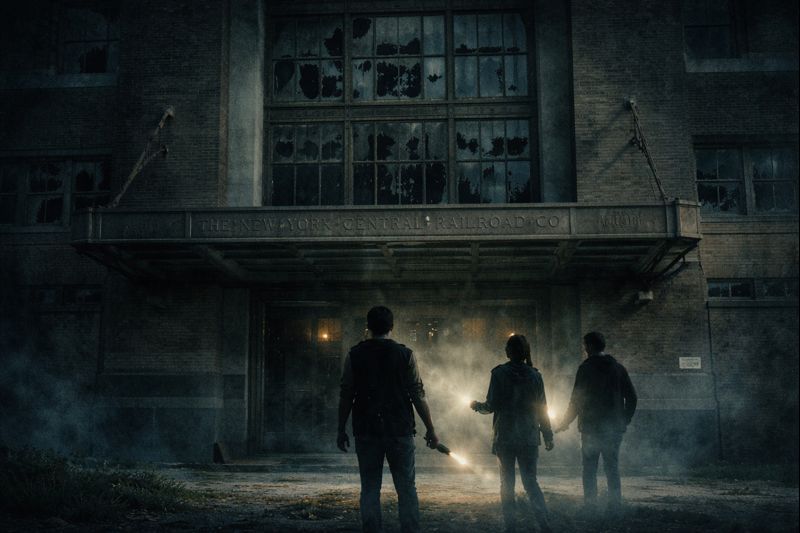
Buffalo Central Terminal rises from the city’s East Side like a paused gesture, an Art Deco exclamation point built at the very end of the railroad age’s optimism. Completed in 1929 and designed by the architectural firm Fellheimer & Wagner, the station was meant to be both a transportation hub and a civic monument. At 271 feet, its office tower dominated the skyline, while the vast concourse below welcomed travelers beneath soaring vaults, marble walls, and geometric ornament drawn from the language of modern industry.
The terminal opened just months before the stock market crash. Its timing could not have been worse. Built to handle more than 10,000 passengers a day, it rarely approached that volume. Still, for decades it served as Buffalo’s front door to the nation. Trains arrived and departed around the clock, carrying soldiers, salesmen, families, and immigrants. Among them were some of the most famous names in American rail travel, including the Broadway Limited, which connected New York City to Chicago, and other long distance routes that stitched Buffalo into a continental network of steel and schedules.
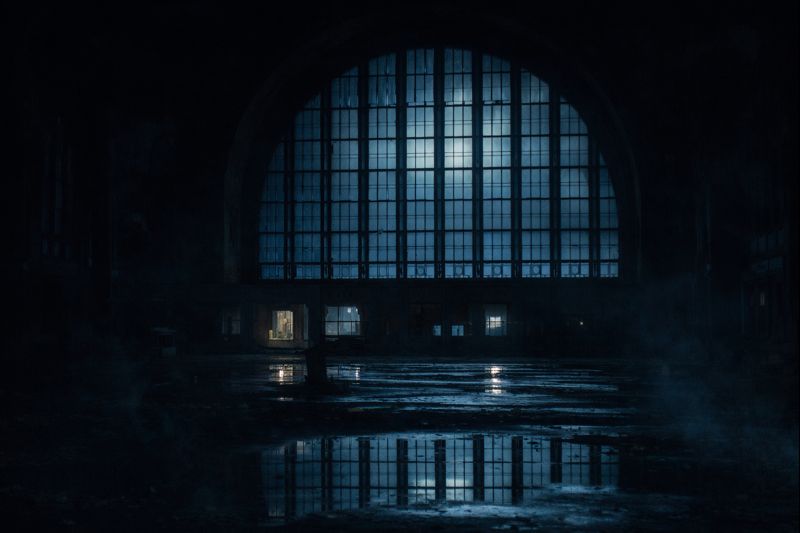
Inside, the building was designed to move bodies efficiently but also to impress them. The main concourse was intentionally oversized, a cathedral for motion and waiting. Light poured in through tall windows by day and reflected off polished stone. Mechanical systems were hidden behind decorative grilles. Even the clock faces mounted on the tower were symbols of precision and modern timekeeping. Everything suggested confidence in progress and permanence.
That confidence faded slowly. As passenger rail declined after World War II and highways reshaped travel patterns, fewer trains stopped here. By 1979, the terminal closed to regular service. What remained was a vast, echoing shell filled with dust, broken glass, and memory. For years it stood abandoned, a landmark without a function, drawing urban explorers, photographers, and stories like the one told in this episode.
Buffalo Central Terminal is not just a ruin. It is a record of ambition built in brick and stone. The trains that once passed through carried more than people. They carried expectations about the future of cities, industry, and movement itself. Walking its halls today, or imagining a night spent inside when it was dark and unsettled, it is easy to feel that the building still holds those expectations, waiting.
In this week’s episode, we return to the terminal not as historians, but as witnesses. Through a firsthand account from one of the teenagers who entered the building that night in 1983, we trace how a place designed for order and movement became disorienting after dark. The episode explores architecture as experience, the psychology of abandoned spaces, and what happens when a building outlasts its purpose but not its presence.





Leave a comment