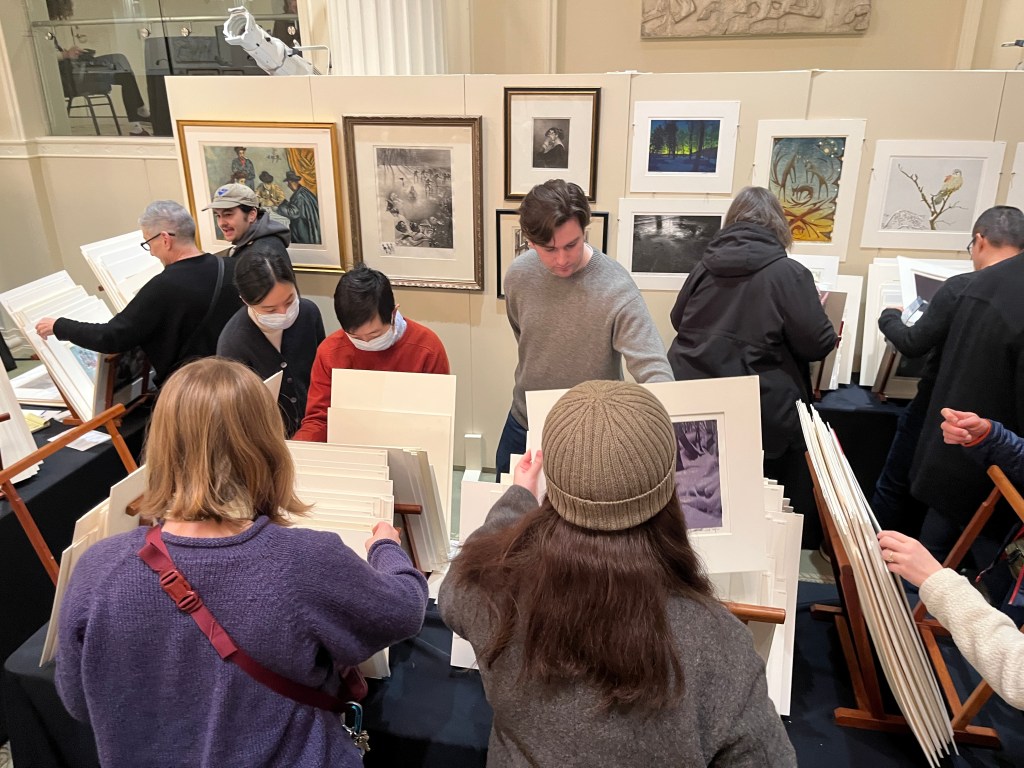
The 2025 edition of the Portland Prine Print Fair seemed as though it may be struggling a bit. Fewer dealers and a few with empty booths due to an ice storm made us wonder how sustainable this institution was.
This year’s edition changed all that. The fair was again quite full, with hearty crowds making it difficult to view any given stack of prints without a wait. The diverse age and even racial demographics of the patrons is also notable, as well as the home cities of the dealers. In addition to California, we noted Maryland and South Carolina and many from New York.
The prints range from the contemporary, from Portland’s Mullowney Printing and Crow’s Nest, a non-profit organization in Pendelton to historic prints brought by dealers from around the country.
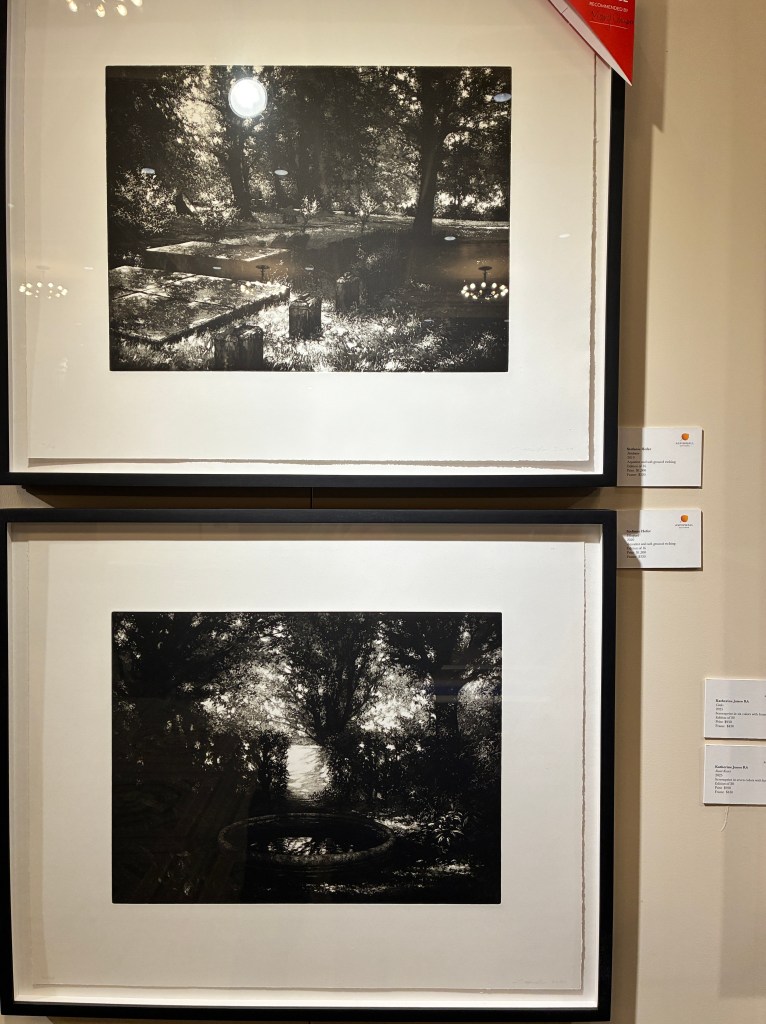
Aspinwall Editions (Hudson, NY) brought works by Stefanie Hofer, the Germany-based artist whose prints have the hush of images surfacing from another era. Two large sheets stage light and shadow with a softness reminiscent of early photography. At first glance I took them for photogravures—until a closer look revealed the hand. Hofer uses spit-bite aquatint to build a soothing darkness, almost velvety in its depth. Then, with softground etching, she captures a dreamy, lens-like blur—an analogue to bokeh—so that edges dissolve and the scene seems to breathe. The subject matter is resolutely ordinary: an urban corner that could be a forgotten graveyard or an unmarked garden. And yet, through her touch, it tips into something quietly enchanted: intimate and familiar, but also strangely peculiar.
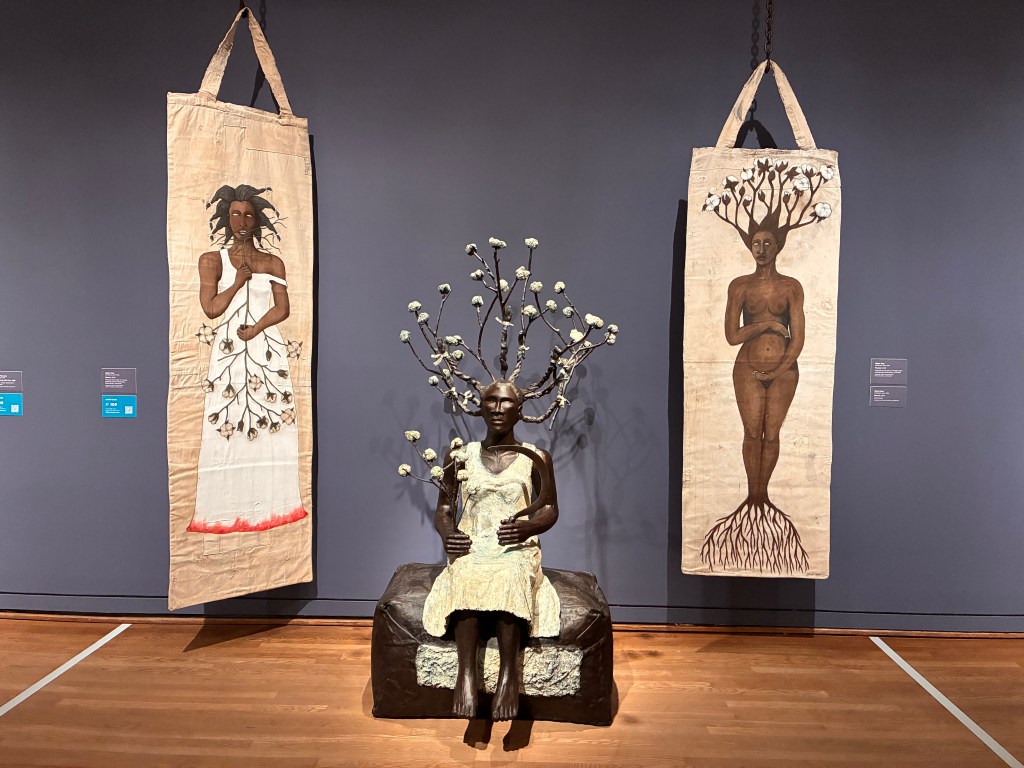
We also greeted Paul, Harry, and Cassie from Mullowney Printing in their usual spot. This year they brought a suite of linocuts by Allison Saar, works that riff on Black experience through the syncopation and improvisation of jazz. Saar’s sculptural work is currently on view just a few doors down in the museum’s main building (photo), and seeing the prints alongside that presence made the booth feel like a resonant extension of the exhibition.
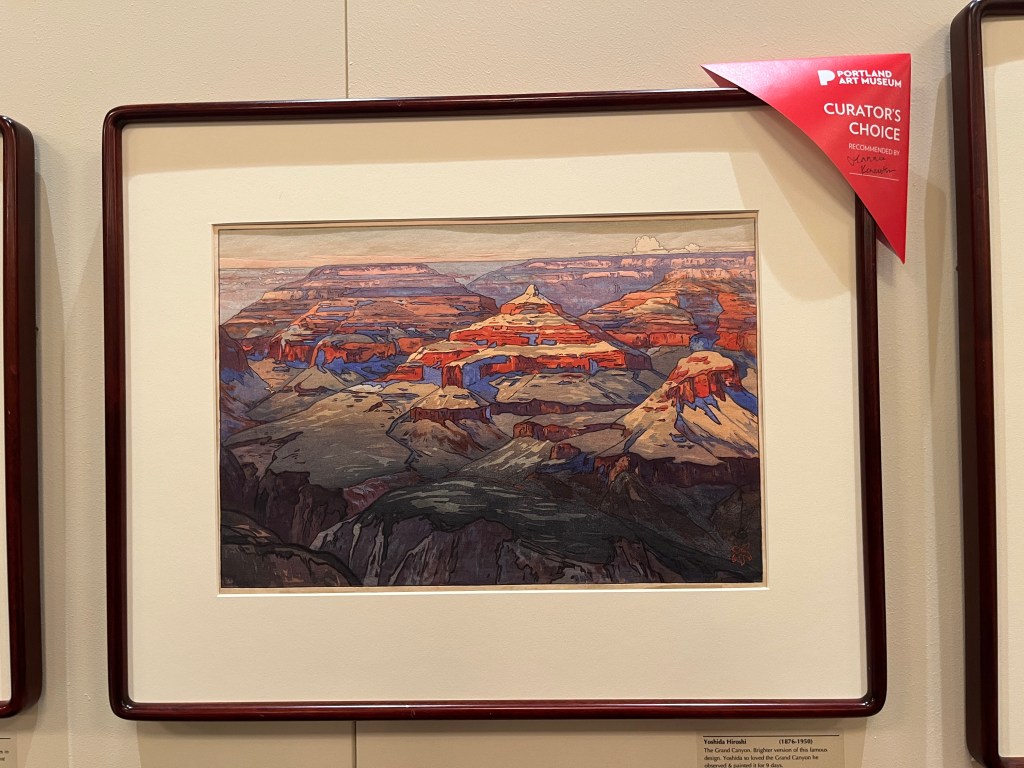
Egenolf Gallery (Burbank, CA), specialists in Japanese prints and drawings, anchored their booth with a back-wall showstopper by Yoshida Hiroshi. Anyone who recently visited the museum’s exhibition of Yoshida Chizuko will recognize the lineage: that first-ever museum presentation of Chizuko also included works by her extended family, among them Hiroshi—her father-in-law and a master of landscape woodblock prints. Like the Taj Mahal print in the museum, the Grand Canyon here dazzled with meticulous detail and striking color. The label noted that Hiroshi loved the site so much he observed and painted it for nine days. By the time we noticed it, a small blue dot—perhaps indicating a hold—had already claimed it.
Portland’s own Augen Gallery, a perennial anchor of the fair, once again offered a generous mix of national and regional artists. In a stack of large prints we came across a Philip Pearlstein: a color lithograph—likely three or four colors—featuring his signature subjects, nude figures set against an interior of patterned rugs. From a high vantage point, Pearlstein renders two bodies with fluidity and precision. The dramatic foreshortenings—those angles most artists avoid—give the scene its modern, stoic charge. Unfazed by abrupt cropping or unidealized posture, he treats the body almost as landscape, observed with clinical clarity and a painter’s stubborn honesty.
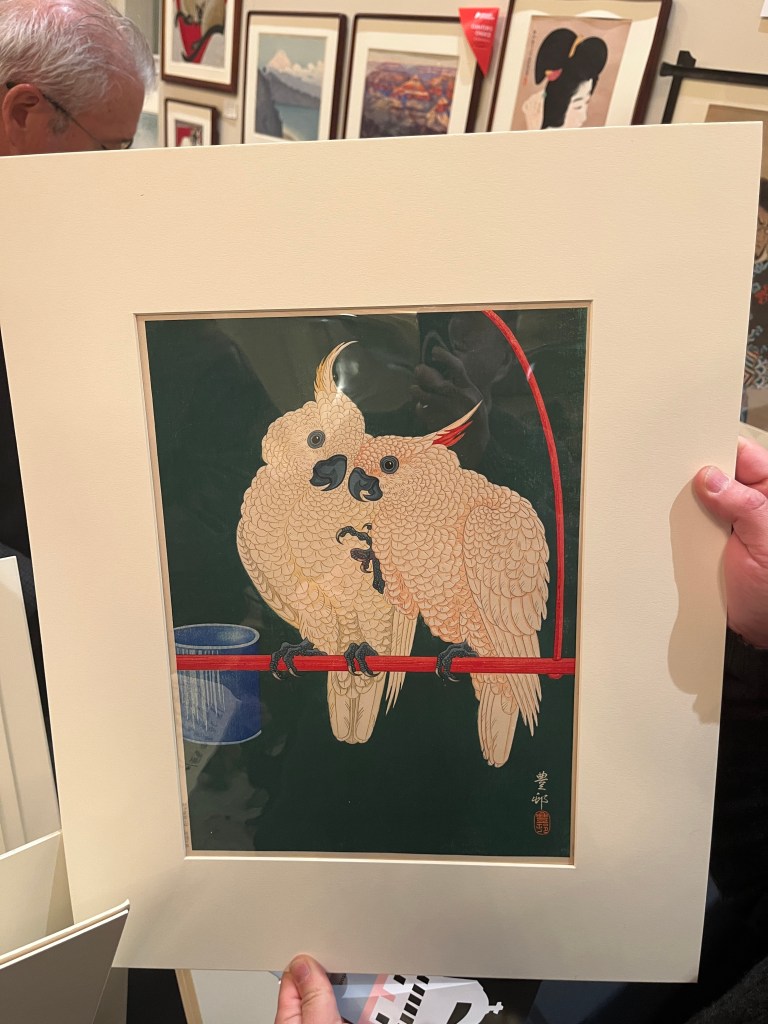
Some people go into a show like this with something in mind, other times it’s a journey of discovery. A 1930s print by Ohara Koson titled Two White Cockatoos was one of those items that flies out of the stack. Offered by Enholf Gallery of Chicago, the $3600 price tag didn’t exactly lend itself to an impulse purchase, however. Don’t let prices keep you away, collecting prints is a journey of learning and discovery, that’s almost as rewarding as a purchase. If you’re just starting out, you’ll learn that the knowledge you gather along the way makes an eventual score even more gratifying.
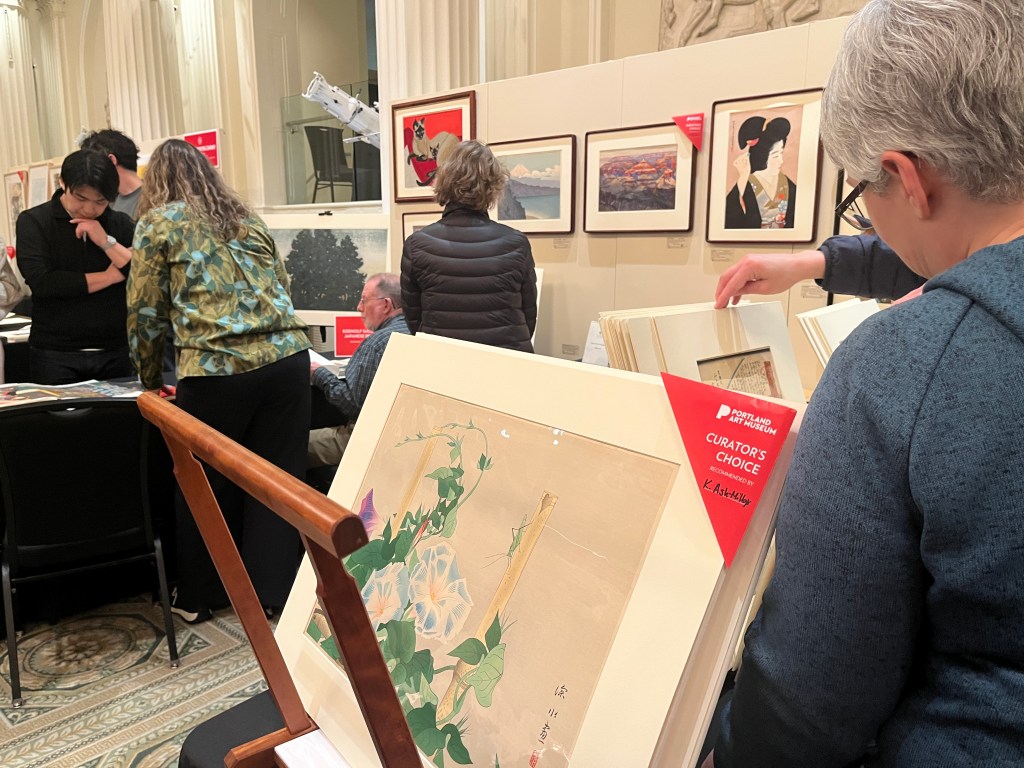
It’s no coincidence that the West Coast’s largest fine-arts print fair has found such a natural home in Portland. In a city without a dense cluster of ultra-wealthy collectors—and with a reputation for grassroots art activism—prints offer a more democratic, even egalitarian, gateway into collecting. They’re often easier to read than singular, high-stakes objects, and their nature as multiples doesn’t just lower the price; it also makes value feel legible and comparatively fair. For younger collectors especially, the experience can be pure pleasure: browsing through stacks the way you’d flip through records, stopping not out of obligation or prestige, but on instinct—when a sheet of paper quietly insists on its beauty.





Leave a comment