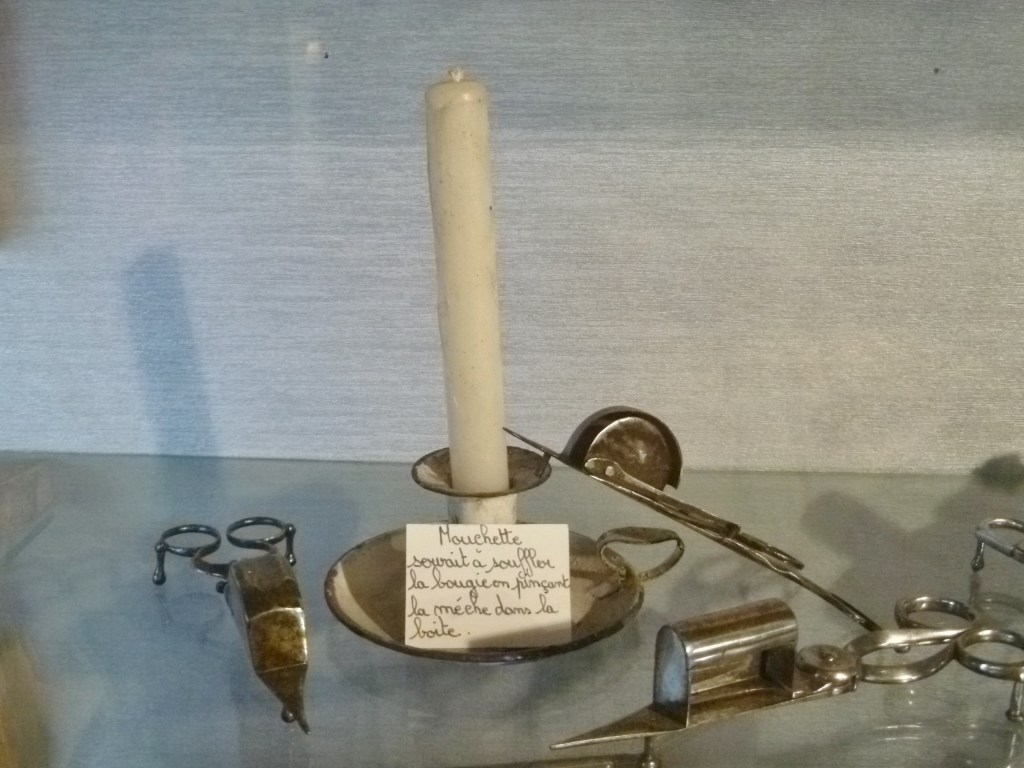
Candle wick trimmers are quiet objects, but they hold centuries of history in their compact, clever form. Long before electric light, households relied on candles that burned unevenly. As the wick charred, the flame dimmed or guttered, filling the room with smoke. The solution was a simple tool made of forged iron or brass, a scissor-like device with a small built-in box. One snip clipped the spent end of the wick, and the ember fell neatly into the little chamber, where it was safely smothered.
These trimmers were used in parlors, farm kitchens, taverns, church vestries, and sickrooms. They were made by tinsmiths and metalworkers across Europe and America from the seventeenth century through the first decades of the nineteenth. Many were plain and workmanlike. Others were decorated with pierced hearts, tulips, scrolls, or initials. Some families kept the same pair for decades, their handles polished by constant use.
Collectors today prize them for both utility and charm. Early examples with tall snuff boxes, delicate legs, or hand filed decoration bring steady interest at shows and auctions. Pieces with an established maker, or with features that date them to a specific region, often command higher prices. The rarest are those with unusual shapes or uncommon alloys. A few museums display trimmers that came from prominent households, and these sometimes carry stories of the people who trimmed their candles while reading, sewing, or keeping vigil.
It is not surprising, then, that wick trimmers often appear in ghost stories and local legends. They were present in rooms where families gathered at night, where the only light came from a flame that needed tending. A tool that controlled fire made a natural bridge to tales of spirits, warnings, and strange interruptions in the quiet hours.
That connection is part of what makes the Middleway trimmers so evocative. Set beside the tale of the Wizard Clip, they become more than a household implement. The crescent marks scratched inside them suggest personal use, or perhaps a habit, repeated often enough to leave a pattern in the metal. Whether they touched the Livingston farmhouse or not, they speak to a time when candlelight shaped the rhythm of life, and when a simple tool could become a witness to fear, faith, and mystery.
Collectors who hold an early pair today often describe a sense of familiarity, as if the weight and balance of the tool recall a movement once second nature to every household. That sense of connection is one reason candle wick trimmers endure. They remind us that history often survives not in grand objects, but in the small ones that lived quietly on mantels and nightstands, waiting for the moment when someone would lean close to the flame and make the careful, necessary cut.

cover: “wick trimmer” (for candles or lamps); Coutellerie de Laguiole, dept. Aveyron, France via Wikimedia Commons





Leave a comment