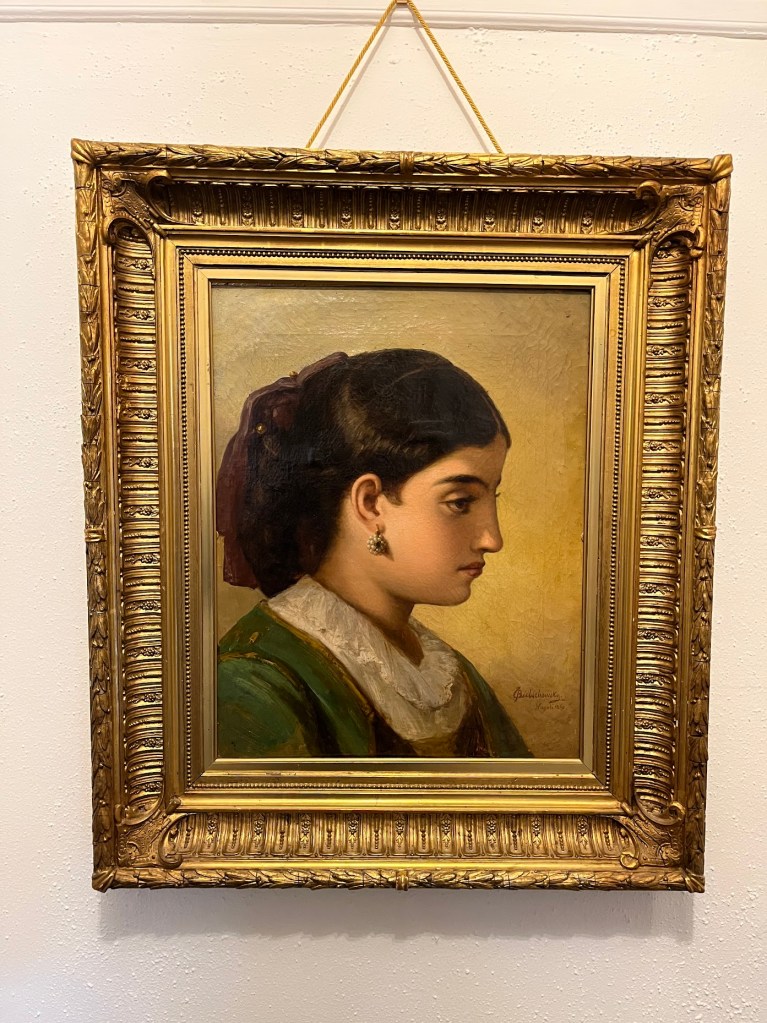
In a quiet portrait painted in 1860 by Karl August Bielschowski, a young woman from Naples gazes pensively to her left, immortalized in profile with a remarkable sense of realism and emotion. For more than 160 years, viewers have been limited to this single vantage point—an enigmatic half-story captured in oil on canvas. But now, artificial intelligence offers a way to break through the boundaries of a static portrait, allowing us to “see” beyond the frame and imagine the person behind the pose.
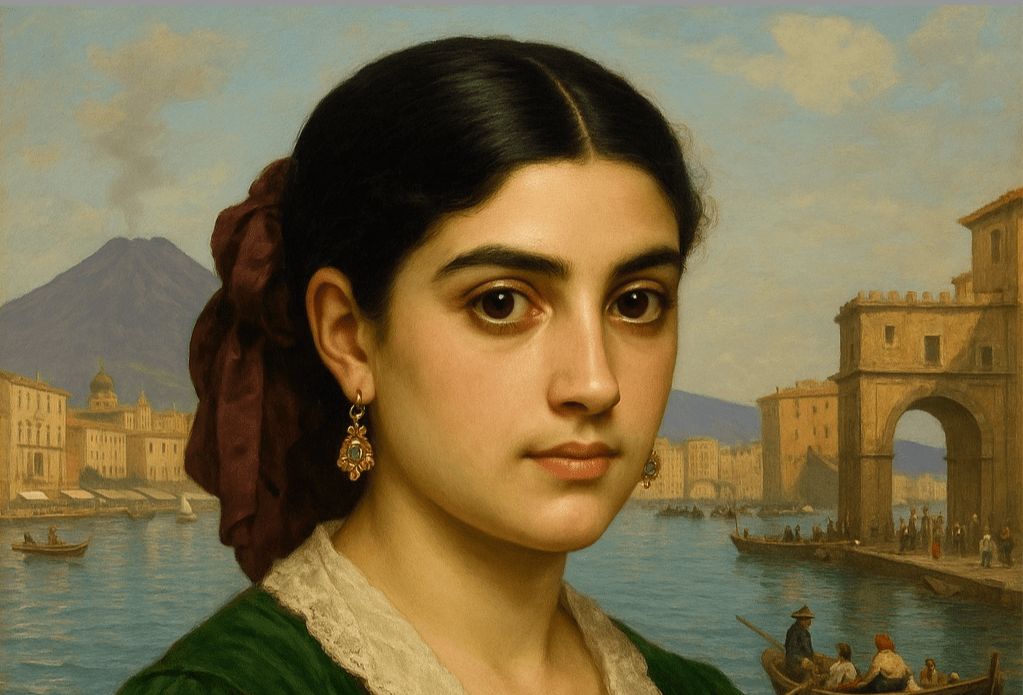
Recent AI-generated images based on Bielschowski’s “Girl in Napoli” provide a stunning example of this potential. Using advanced image generation models, these recreations have produced lifelike views of the same young woman facing the viewer directly—something the original artist never painted. One AI image even places her in a detailed background of 19th-century Naples, with the iconic silhouette of Mount Vesuvius rising in the distance and bustling city life unfolding on the waterfront.

These AI-generated expansions offer more than a novel curiosity: they help us better understand the human stories captured in old paintings. By simulating how the subject might have looked from other angles, we can appreciate their individuality beyond the narrow perspective the artist chose. This can spark new questions and insights: What emotions might she have expressed if she turned to face us? How would her surroundings have appeared at the time? Could her clothes, jewelry, or hairstyle tell us more about her life and social status?

For historians, educators, and art lovers, AI reconstructions provide a valuable tool to recontextualize artworks. They can enrich museum experiences with interactive displays or augmented reality features showing alternative views of classic portraits. Researchers studying historical fashion, physiognomy, or cultural settings can gain fuller visual references. Even genealogists or communities exploring local history might find fresh ways to connect with portraits of ancestors or unknown figures.
Of course, these AI-generated images are imaginative reconstructions, not historical fact. They reflect our modern interpretations and the biases of the algorithms used. Yet, when combined with rigorous research, they can serve as thought-provoking companions to original works—stimulating curiosity and dialogue about the people and places captured in art.
In the case of Bielschowski’s Napoli girl, the AI offers a chance to step through time, to glimpse her face from the front, and to wander the lively streets of 19th-century Naples behind her. It’s a poetic reminder that every portrait holds a deeper story, waiting for new tools—and new imaginations—to help it unfold.





Leave a comment