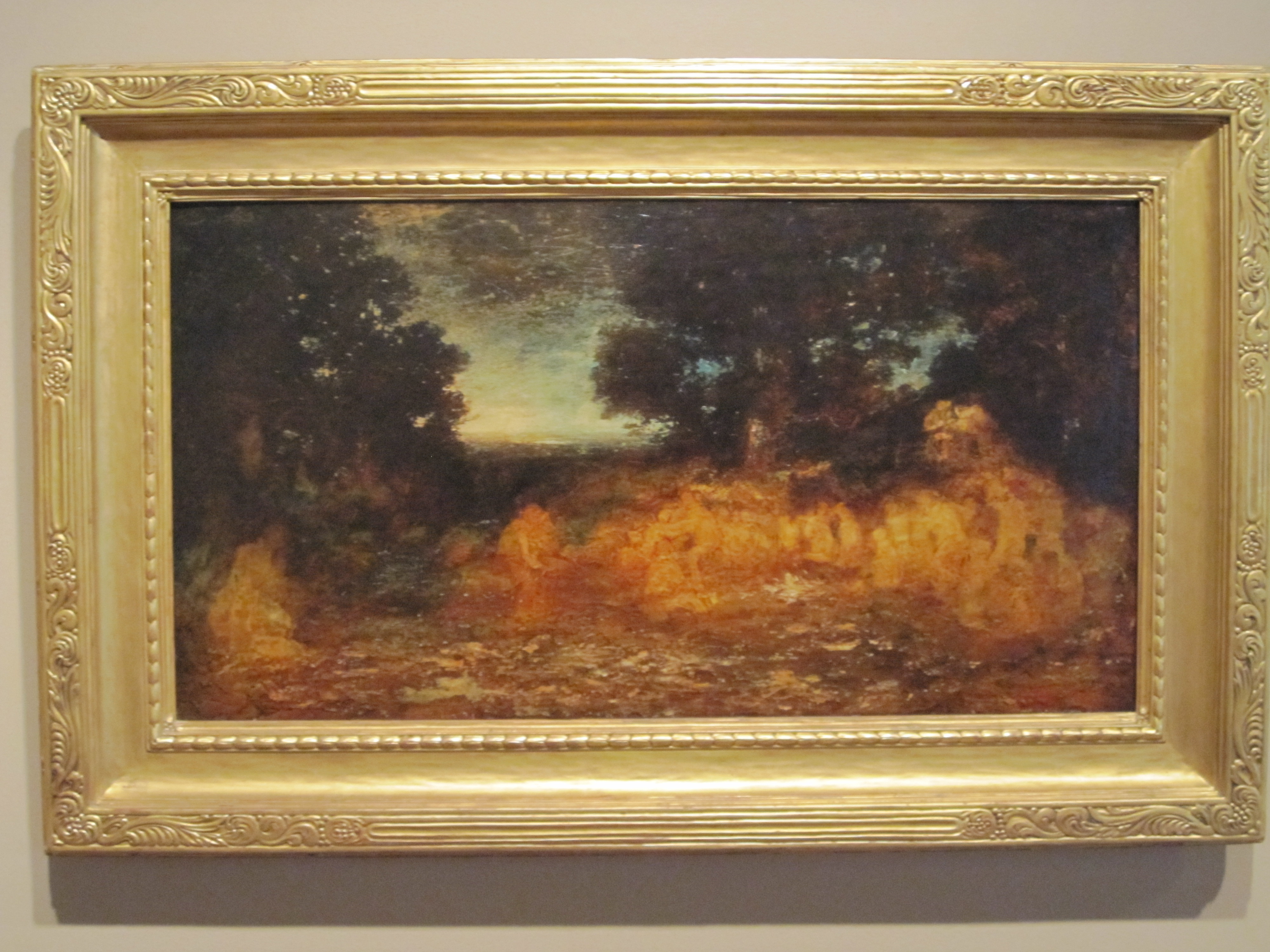
A visit to the Art Institute of Chicago over the weekend provided some new discoveries including a mesmerizing painting by Ralph Blakelock titles The Vision of Life (also known as Ghost Dance) 1895-1897. Blakelock is one of those artists who can be quite hard to get a grasp on. Most are very dark treed landscapes, but this one incorporates what look to be unfinished figures, yet the painting is boldly signed as if it were a completed work. Many of Blakelock’s paintings depict Indians, but they are usually not given a central position. Blakelock had traveled west in 1869 and 1872, but did not return. When he painted The Vision of Life, he was 20 years removed from such scenes. Here, Blakelock could be a commentary on the disappearance of the American Indian from the landscape, or perhaps a personal commentary on a fading memory.
- The Vision of Life by Ralph Blakelock
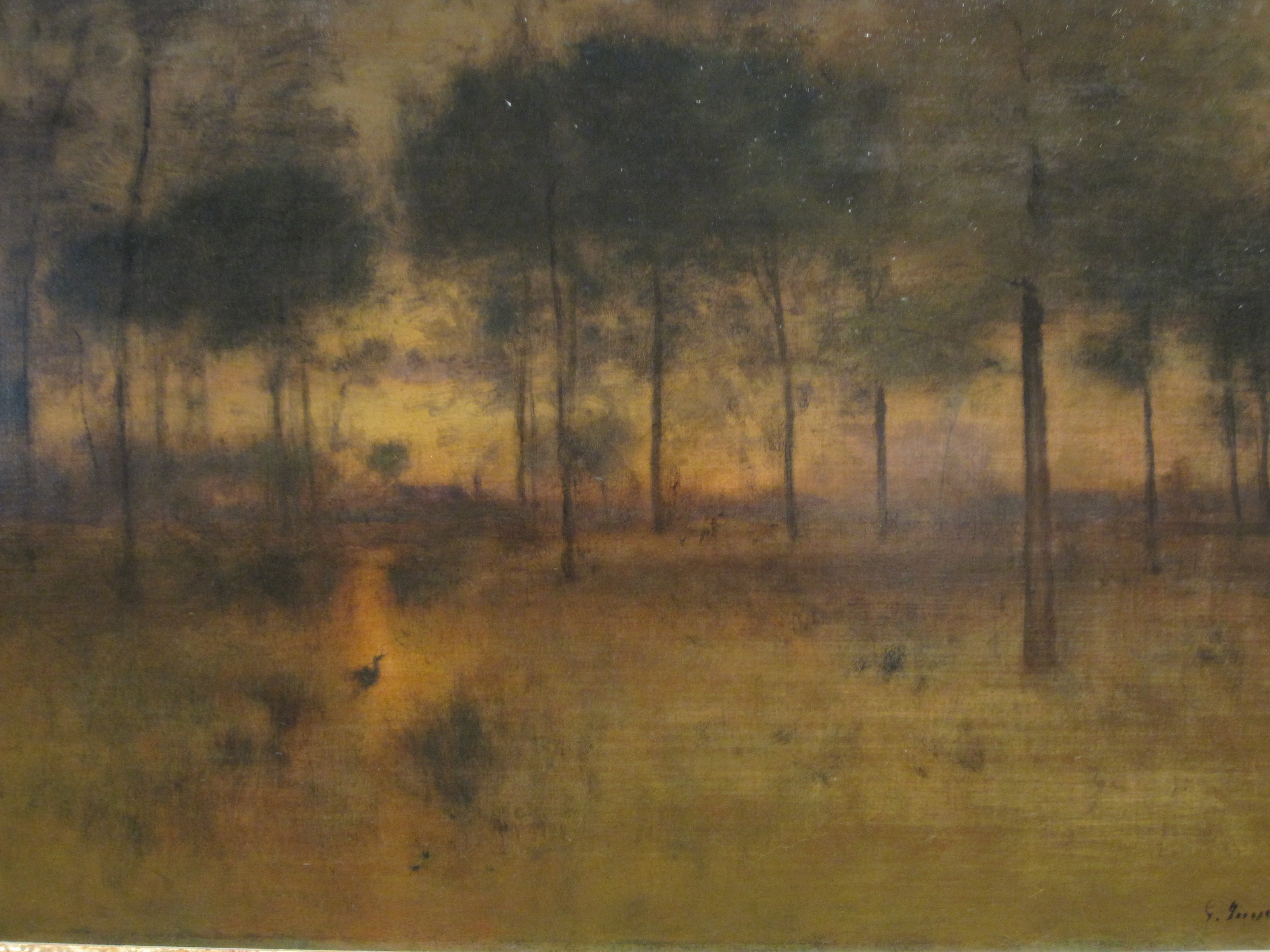
George Inness’s The Home of the Heron also appears at first glance to be an unfinished work. Like the Blakelock, however it is clearly signed. This may not mean as much for Inness as he always reserved the right to make changes to paintings, sometimes making significant revisions even after they were sold. Compare it to Blakelock, however and we find that artists of the period were often exporing the interaction between people and the landscape and sometimes animals and the landscape. Many works by Inness include misty figures. When we look at them we’re not quite sure if they are there or not. To me they represent the humanness that’s imprinted on a place, a humanness which remains after we are gone.





Leave a comment