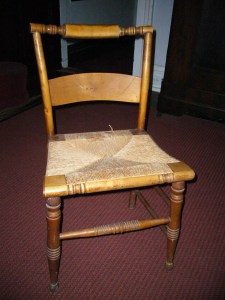
In a word, yes! Antiques are green because they don’t need to be created, they already exist. That means no carbon has been burned (not recently anyway) to produce an antique. There could be a qualifier, however, and that is assuming the antique hasn’t traveled around in a truck from show-to-show until it’s purchased. If it had, driving heavy furniture around can hardly be called a green practice. If we go back far enough, most of what anyone did in say the 1830s was comparitively green–outside of burning wood for heat, most people didn’t have much of a carbon footprint.
Increasingly, purveyors of antiques are using the “green” angle to sell their wares, or at minimum, pointing it out. It’s unclear if buyers yet are looking at antiques because they are green. While as a consumer, the concept of green appeals to me, I’m not sure that would be a motivation in buying a piece of furniture.
“We have the opportunity of a lifetime here: green is hot and antiques are green,” wrote John Fiske, Editor-in-Chief, New England Antiques Journal. I suspect that “green” may be a better way to sell used furniture than antiques, however. Collecting antiques combines an appreciation for both art and history. “Green” only applies to antiques in that they weren’t produced recently. An appreciation of the quality may reveal some practices, regardless of when they occured, that were/are very green or not very green. For example, using local woods, hand tools and local production: very green. Using imported exotic wood: not so green.
I am simply issuing a cautionary advisory about jumping too quickly on the “green” bandwagon and using it as a major selling point for antiques. Yes, it is a very good practice to consider buying a used piece of furniture instead of a new one. Yes, antiques are green. The major attraction to them isn’t any component of the production process, however. It’s the art in the antique, and a sense of our local, and human history.
I think buying antiques only or even primarily because they are green, sells them short. Antiques are desireable because they are unique… in most cases they are art. Most anything that’s not mass-produced (and some of what we think of as antique was mass-produced), is almost inherently green. Yet, I can’t imagine choosing a painting based on it’s environmentally-friendly qualities. An antique doesn’t stray far from not needing such a litmus test.





Leave a comment