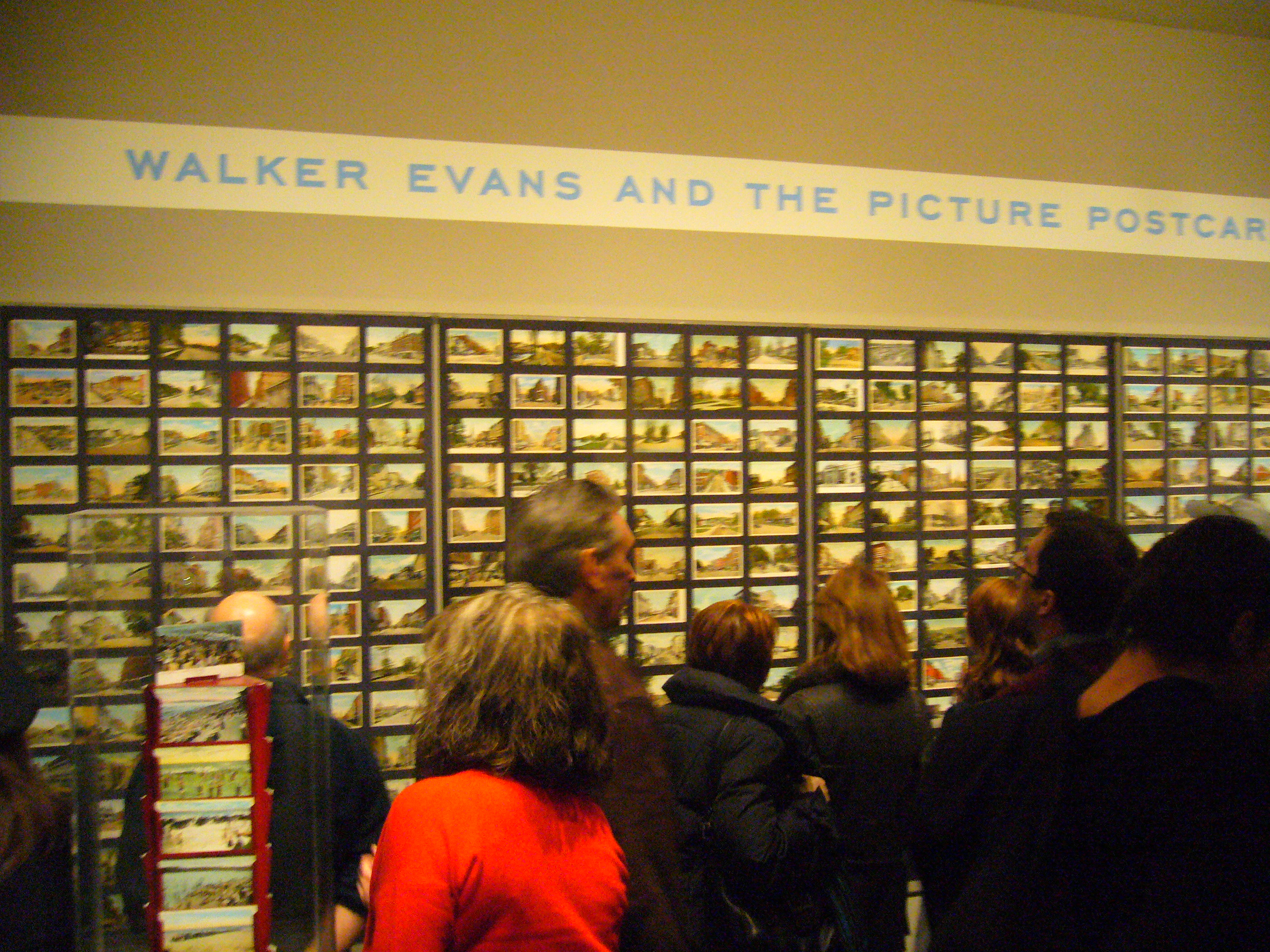
The crowd squeezed into relatively small galleries of the exhibition “Walker Evans’ and the Picture Postcard” at Met last Sunday afternoon. On any given wall, there were probably as many heads staring and commenting as the number of postcards displayed on grids.
However, few may realize or care about the curatorial perspective behind the exhibition: the relationship between the factual characteristics of postcards of common places with Walker Evans’ lean anti-arty photograph style. All visitors were busy: They were busy finding what a piece of commonplace that they know of looked like before the great war.
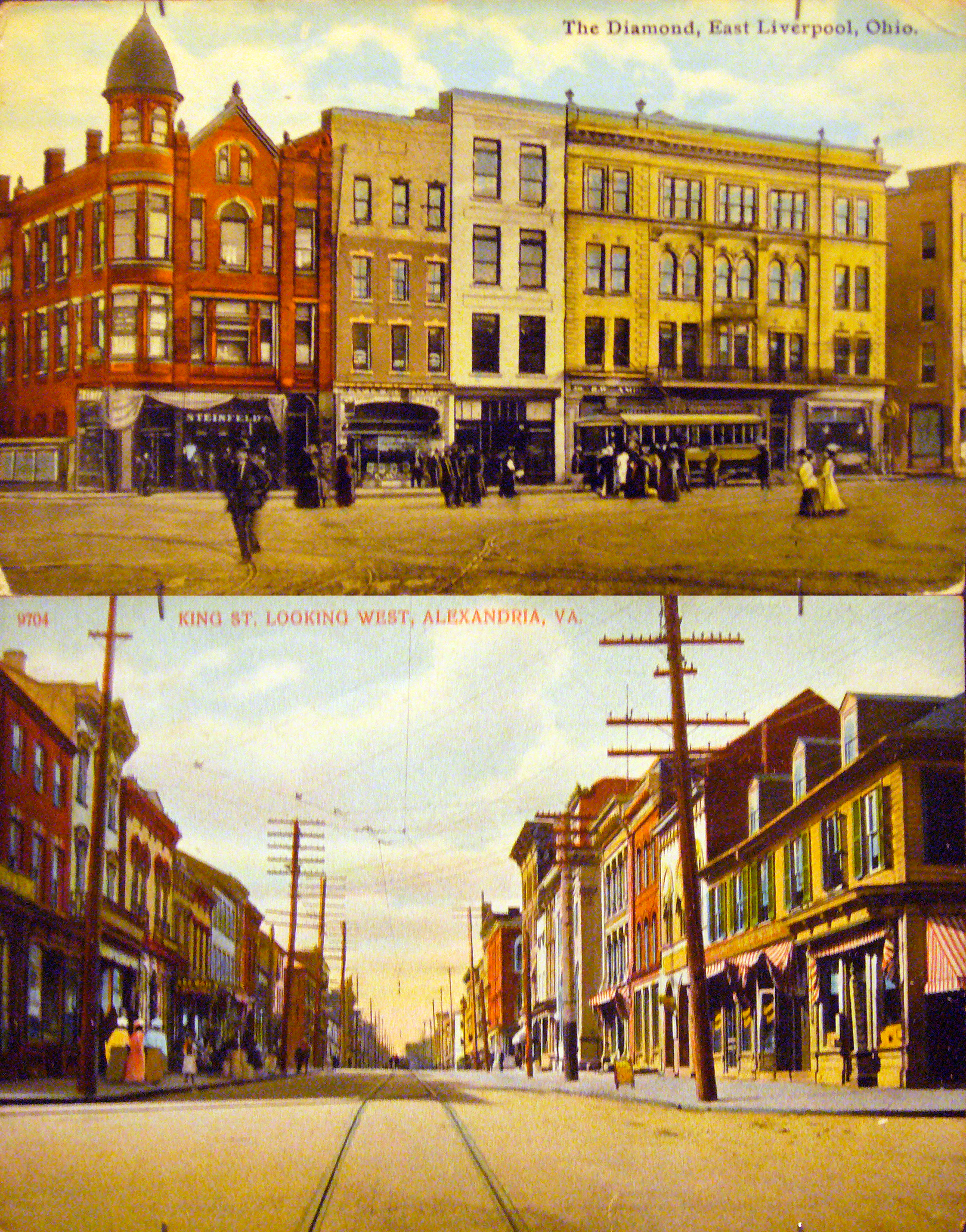
Postcards are manufactured as a record of the present; yet through the hands of collectors, they become proof of what was there or more often what was not there, thus arising memory of the inevitable loss of the past and resignation of nothing could stay perpetual in the perpetually changing world.
The acute pain can be felt more evidently in those “main street” postcards where common places, neatly laid out if somewhat lack individuality, now become rusty and even ghostly. One example is a postcard of East Liverpool, OH: a small town along the Ohio River. I once stopped there briefly for its antique stores. Near downtown, those brick buildings were very impressive, but the faded commercial signs on the side walls were from different eras. I wandered through some antique stores which were piled with stuff that may take years to look through every item. There I bought a book about 19th-century American art, which I never read. It was a hot summer weekend day. The air was stagnant. The town is quiet and devoid of people. It was hard for me to believe that East Liverpool was the Pottery Capital of the World at one time.
One woman in the exhibition was commenting on another postcard of a town in Rhode Island. It was in the same tone. “It still looks like that. Almost, except there is no…” She knew she was wrong when she kept examining the difference. The architectural integrity of Main Street was not on the agendas of those common places. They changed, not because of age, but mostly because of human intervention.
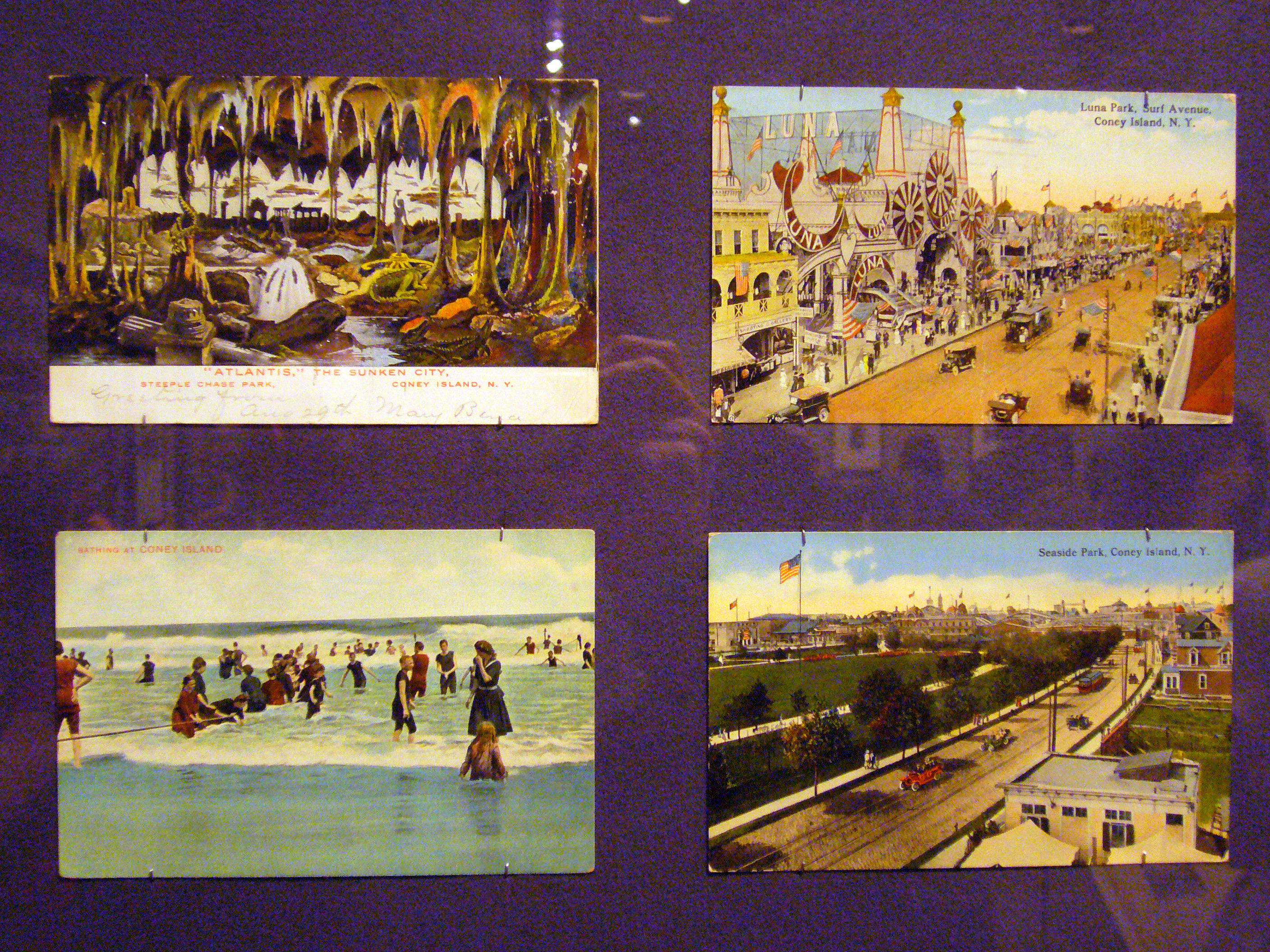
New York scenes have a large proportion in Walker Evan’s collection. I have found those pictures of theme parks in Coney Island irresistible. The factual documentation in these postcards looks more like fairyland, because that’s what theme parks were. It is a place in the era when mundane living devoured much of personal spare time, where people could behave what they wanted, not what they should, and where people of diverse backgrounds shared prime joy and scare for everything exotic and unusual.
For me, that is arty. Thanks, Evans.
——————————————————
The exhibition comes with a catalog book with extensive reproduction images of postcards from Evans’ collection. Below is the cover of the book.





Leave a comment